Agiloft's Role in Contract Lifecycle Management
Table of Contents
- Understanding Agiloft’s Position in the CLM Market
- The No-Code CLM Architecture Explained
- AI on Inside: What It Actually Means
- Enterprise Workflow Automation Capabilities
- Configuration Versus Complexity Tradeoff
- Target Market and Ideal Customer Profile
- Implementation Considerations and Pricing Structure
- Real-World Applications Across Legal Practice Areas
- Competitive Scene and Positioning
- Bottom Line
- Understanding Agiloft’s Position in the CLM Market
- The No-Code CLM Architecture Explained
- AI on Inside: What It Actually Means
- Enterprise Workflow Automation Capabilities
- Configuration Versus Complexity Tradeoff
- Target Market and Ideal Customer Profile
- Implementation Considerations and Pricing Structure
- Real-World Applications Across Legal Practice Areas
- Competitive Scene and Positioning
- Bottom Line
Understanding Agiloft’s Position in the CLM Market
Law firms and corporate legal departments face challenges in finding contract management platforms that adapt to workflows without extensive developer involvement. Agiloft, a veteran in the contract lifecycle management (CLM) market, offers a distinct solution. With nearly 30 years in the industry and $45 million in funding, Agiloft is known for extreme configurability on a no-code CLM architecture.
Unlike many platforms, Agiloft allows legal teams to maintain their processes. Its “AI on Inside” branding integrates artificial intelligence capabilities into its core platform. For legal professionals evaluating CLM solutions, understanding Agiloft’s offerings is crucial to improving contract handling.
The No-Code CLM Architecture Explained
Agiloft’s Market Position:
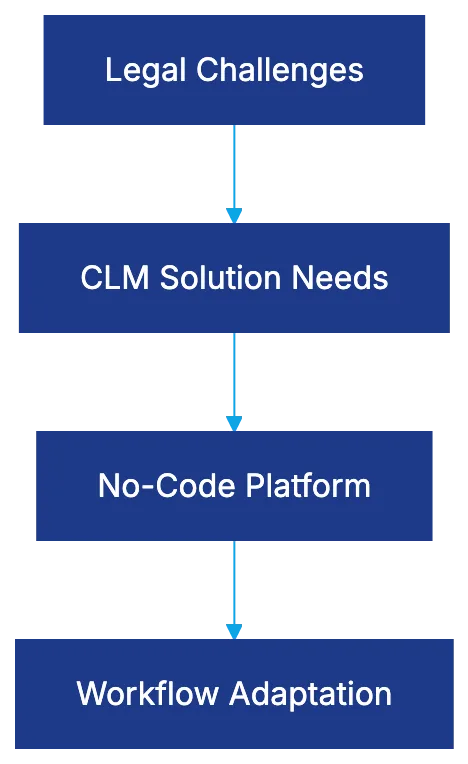
Agiloft’s foundation is its no-code CLM platform architecture, allowing legal operations professionals to configure workflows, create custom fields, design approval chains, and alter user interfaces without writing code or relying on IT resources.
The platform lets users drag, drop, and configure contract processes according to their organization’s needs. This empowers legal professionals directly without the delays of custom development. Agiloft’s system includes modifiable pre-built templates for common contracts, with complex implementations benefiting from professional services.
AI on Inside: What It Actually Means
Agiloft’s “AI on Inside” focuses on specific areas within its platform. Natural language processing extracts key terms and metadata from contracts during intake, reducing manual data entry. Machine learning identifies clause deviations and flags risks, integrating deeply with workflow automation.
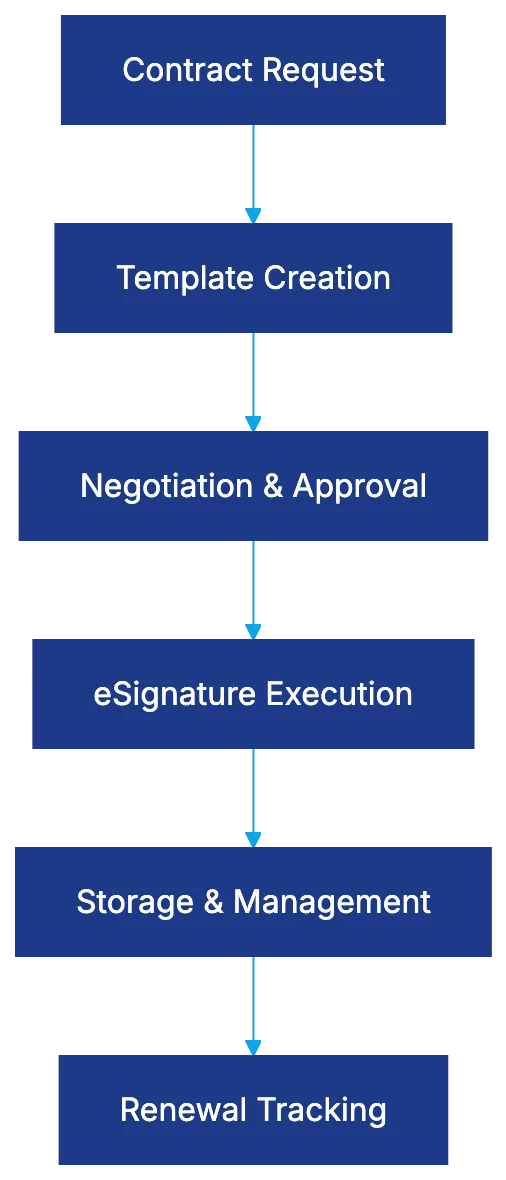
No-Code Configuration Workflow:

Enterprise Workflow Automation Capabilities
Enterprise workflow automation underscores Agiloft’s configurability. Large organizations manage workflows involving multiple departments, approval levels, and conditional routing. Teams can visually map workflows and set contract movement rules.
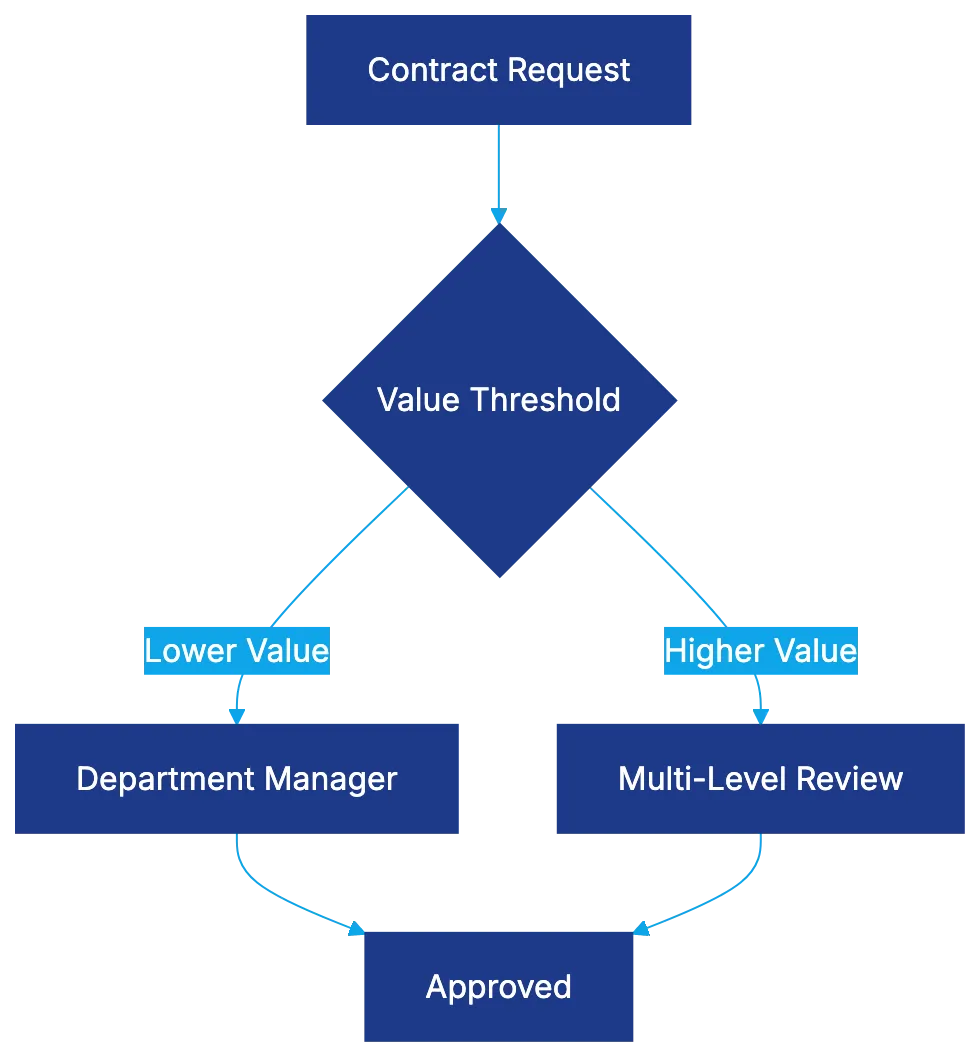
For example, a company might configure the system for software licensing agreements under fifty thousand dollars to require only departmental manager approval, while higher amounts require additional reviews. This workflow engine handles parallel approvals, escalations, and notifications.
Configuration Versus Complexity Tradeoff
Agiloft’s configurability offers customization but can lead to complexity. Legal departments without dedicated administrators might create difficult-to-maintain systems. While daily contract tasks are intuitive, configuring workflows involves a learning curve. Agiloft offers training and certification, essential for effective administration.
Enterprise Approval Workflow Example:
Target Market and Ideal Customer Profile
Agiloft targets mid-market to enterprise organizations. It’s ideal for legal departments with complex workflows justifying the setup effort. Organizations managing hundreds or thousands of contracts annually, especially with multi-department workflows, benefit most.
Regulated industries often choose Agiloft for its compliance controls built into workflows, serving sectors like financial services, healthcare, and government contractors.
Implementation Considerations and Pricing Structure
Agiloft operates on a subscription-based pricing model, varying by user count and setup scope. Legal departments should budget for software licensing and setup services, especially for complex deployments. Setup timelines range from weeks to months, depending on customization.
Ongoing maintenance and administration costs are significant considerations, benefiting from dedicated system administration and workflow improvement.
Real-World Applications Across Legal Practice Areas
Agiloft is applied across diverse contract types, utilizing its configurability differently. Procurement teams manage supplier agreements with vendor checks and insurance verifications, while corporate legal departments integrate with CRM systems for customer information.
Legal operations in regulated industries use audit trail capabilities for compliance. IT and technology contracts are managed with security requirements in agreements.
Competitive Scene and Positioning
Agiloft competes in a crowded market, including players like Icertis, Ironclad, and DocuSign CLM. It offers configurability at lower price points, making it accessible to mid-market firms. Compared to Ironclad’s modern user experience and convenience, Agiloft focuses on customization.
Bottom Line
Agiloft adapts to legal departments’ needs rather than imposing rigid constraints. It’s suitable for organizations with complex workflows and compliance requirements. The no-code architecture enables legal operations professionals to build workflows without IT dependency. AI on Inside capabilities add value in contract intake and clause analysis.
Organizations should assess if their contract volume, process complexity, and resources justify Agiloft’s capabilities. For those fitting these criteria, Agiloft is a mature, configurable platform for enterprise requirements.
Frequently Asked Questions
What are the key features of Agiloft's no-code CLM platform?
Agiloft's no-code CLM platform allows users to configure workflows, create custom fields, and design approval chains without needing technical expertise. This empowers legal professionals to adapt the system to their specific needs through a user-friendly drag-and-drop interface.
How does Agiloft's AI capabilities enhance contract management?
The "AI on Inside" feature incorporates natural language processing to extract key terms and metadata from contracts, reducing manual data entry. Machine learning algorithms also help identify clause deviations and potential risks, integrating seamlessly with automated workflows.
Who is Agiloft's ideal customer?
Agiloft targets mid-market to enterprise organizations, particularly those with complex contract workflows. It is especially suited for legal departments handling hundreds or thousands of contracts annually and those in regulated industries requiring strict compliance controls.
What should organizations consider when implementing Agiloft?
Organizations should budget for both software licensing and setup services, particularly for customized implementations. Setup timelines can vary from weeks to months based on the level of configuration required, and ongoing maintenance costs should also be factored in.
How does Agiloft support compliance requirements?
Agiloft's platform includes built-in compliance controls that are critical for industries like financial services and healthcare. Its audit trail capabilities enable users to track changes and manage contracts in adherence to regulatory standards.
What training options are available for using Agiloft?
Agiloft offers training and certification programs designed to help users maximize the platform's features. This training is essential for both effective administration and ensuring that teams can efficiently manage workflows and configurations.
How does Agiloft compare to other CLM solutions in the market?
Agiloft distinguishes itself by providing high configurability at lower price points, making it accessible to mid-market firms. While competitors like Ironclad offer modern user experiences, Agiloft focuses on customization, catering specifically to organizations with unique workflow needs.
Related Articles
Conga: Revolutionizing Legal Technology for Professionals
Discover how Conga streamlines contract management and document generation for legal teams using Salesforce.
Malbek's Innovative Take on Contract Lifecycle Management
Explore how Malbek's conversational AI transforms contract lifecycle management for legal teams in mid-market and enterprise organizations.
DocuSign CLM: Streamlining Contract Management
Discover how DocuSign CLM enhances contract management with seamless e-signature integration and powerful automation features.