Conga: Revolutionizing Legal Technology for Professionals
Table of Contents
- What is Conga and How Does It Serve Legal Professionals
- The 2020 Consolidation and Enterprise Strategy
- Conga CLM: Contract Lifecycle Management for Salesforce Environments
- Conga Composer: Advanced Document Generation Capabilities
- Salesforce-Native Architecture: Benefits and Constraints
- Target Market and Ideal Use Cases
- Integration with Revenue Lifecycle Management
- Pricing Model and Implementation Considerations
- Competitive Position and Alternative Considerations
- Bottom Line
- What is Conga and How Does It Serve Legal Professionals
- The 2020 Consolidation and Enterprise Strategy
- Conga CLM: Contract Lifecycle Management for Salesforce Environments
- Conga Composer: Advanced Document Generation Capabilities
- Salesforce-Native Architecture: Benefits and Constraints
- Target Market and Ideal Use Cases
- Integration with Revenue Lifecycle Management
- Pricing Model and Implementation Considerations
- Competitive Position and Alternative Considerations
- Bottom Line
What is Conga and How Does It Serve Legal Professionals
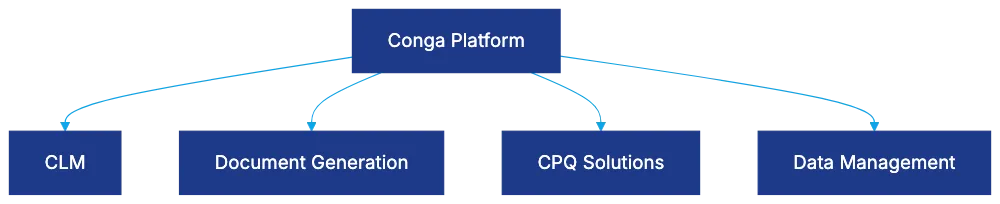
Conga entered the legal technology field in 2020 by consolidating multiple enterprise software companies, including Conga (document generation), Apttus (CLM and configure-price-quote solutions), and Conga Grid (data management), positioning itself to address the entire revenue lifecycle. It offers Salesforce-native CLM and document automation for legal teams within Salesforce-operated organizations, providing an advantage over solutions needing complex integrations.
The platform enables legal professionals to manage contracts, generate documents, and handle the revenue lifecycle without exiting Salesforce, providing a seamless user experience within the Salesforce environment. This reduces friction and improves visibility, though raises questions about trade-offs in functionality compared to specialized CLM platforms.
The 2020 Consolidation and Enterprise Strategy
Conga united several enterprise software companies, including Conga (document generation), Apttus (CLM and configure-price-quote solutions), and Conga Grid (data management), positioning itself to address the entire revenue lifecycle.
Conga Platform Components:
This strategy aligns with a trend toward complete legal technology platforms. Conga focuses on Salesforce rather than a platform-agnostic solution, ideal for Salesforce users but unsuitable for organizations using other CRM platforms.
Conga CLM: Contract Lifecycle Management for Salesforce Environments
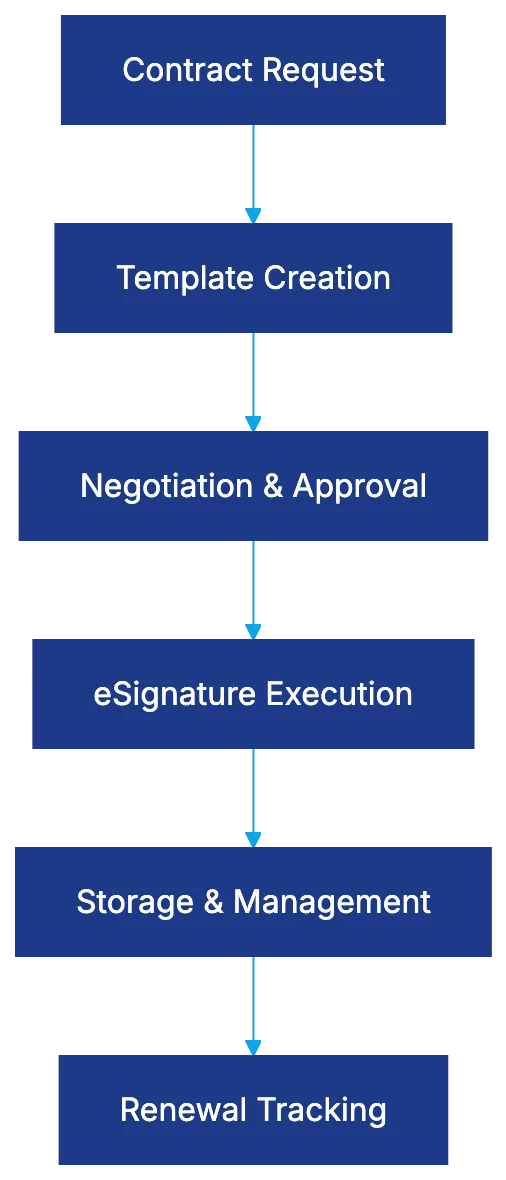
Conga CLM manages contracts from request to renewal within Salesforce, maintaining sales data, customer information, and contract details in a single database. It includes clause libraries for standardized agreement creation, reducing legal review time.
In renewal management, renewal dates appear in sales pipelines within Salesforce, and alerts ensure contracts don’t expire unnoticed. Obligations are tracked, addressing a common CLM issue where contracts are neglected post-signature.
Contract Lifecycle Management Flow:

Conga Composer: Advanced Document Generation Capabilities
Conga Composer automates complex document creation by pulling data from Salesforce into templates, allowing users to generate documents in seconds and handle conditional logic, significantly saving time for legal operations teams. Legal teams use it for NDAs, engagement letters, and more. It handles conditional logic, generating documents in seconds, and can batch generate documents, saving significant time for legal operations teams.
Salesforce-Native Architecture: Benefits and Constraints
Conga’s Salesforce-native design provides seamless access to data, eliminating synchronization delays common in integrated systems. Users access it via the Salesforce interface, simplifying permission management and security.
However, this integration binds functionality to Salesforce capabilities. Organizations not using Salesforce or operating multiple CRM systems may find it challenging. Performance may be affected in large Salesforce implementations processing complex contracts.
Target Market and Ideal Use Cases
Conga serves enterprise organizations already committed to Salesforce, especially those managing complex revenue operations, offering a comprehensive solution for contract lifecycle management within the Salesforce ecosystem. It’s ideal for companies with CPQ workflows, where approved quotes become executable contracts seamlessly.
Companies with high contract volumes benefit from Conga’s automation and consistency. However, legal departments primarily handling complex, negotiated contracts may not fully benefit from Conga’s standardization capabilities.
Integration with Revenue Lifecycle Management
Revenue Lifecycle Integration:
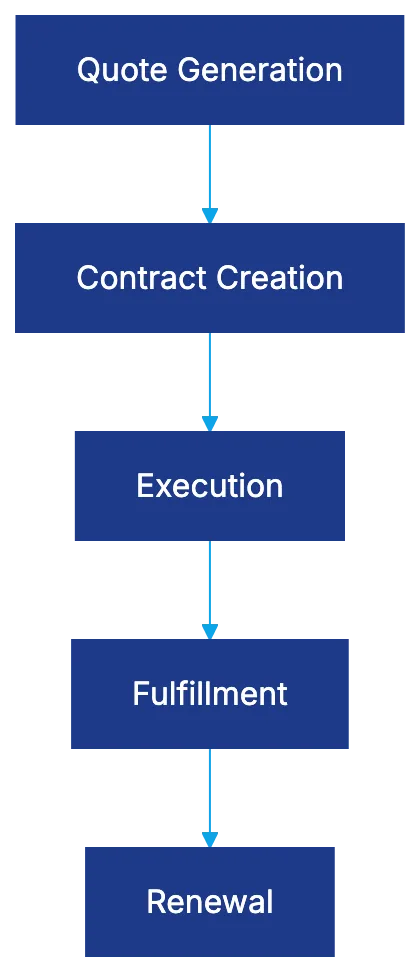
Conga integrates contract execution to renewal in the revenue lifecycle. Quoted terms flow into contract templates, driving post-execution activities like fulfillment and renewal management. Legal teams can connect contract work to business outcomes, enhancing their role as business partners.
Pricing Model and Implementation Considerations
Conga offers enterprise pricing with custom quotes. Setup involves Conga configuration and Salesforce integration, with most implementations taking three to six months. Legal teams need Salesforce collaboration for administration.
Total cost includes fees and setup services. Organizations should weigh this against automation benefits. Conga’s integration advantages justify costs for Salesforce-invested companies compared to standalone platforms.
Competitive Position and Alternative Considerations
Conga competes with Salesforce-native and platform-agnostic CLM systems. It stands out due to Conga Composer’s document generation power and Salesforce integration benefits. Specialized CLM platforms offer deeper features but require integration with Salesforce.
Organizations should consider if their legal operations align with Salesforce use. Those heavily using Salesforce gain more from Conga’s integration. Legal teams primarily active outside Salesforce may value CLM depth more.
Bottom Line
Conga suits legal teams in Salesforce-committed enterprises, offering CLM capabilities, strong document generation, and revenue lifecycle visibility. The platform is less ideal for non-Salesforce users or those needing specialized legal tools. For the right organizations, Conga eliminates system inefficiencies and justifies technology investments.
Frequently Asked Questions
What types of legal teams can benefit from using Conga?
Conga is particularly beneficial for enterprise legal teams that are already invested in the Salesforce ecosystem, especially those managing complex revenue operations. Organizations with high volumes of contracts or those utilizing configure-price-quote (CPQ) workflows will find its capabilities advantageous.
How does Conga's integration with Salesforce differ from other CLM solutions?
Conga's Salesforce-native design provides direct access to Salesforce data, streamlining workflows and eliminating typical synchronization delays associated with integrated solutions. In contrast, non-native systems may require complex integrations, potentially leading to fragmentation and inefficiencies.
What is the expected implementation timeline for Conga?
Implementing Conga typically takes between three to six months, depending on the organization's specific needs and the extent of Salesforce configuration required. Active collaboration between legal teams and Salesforce administrators is essential during this process.
Can organizations using other CRMs utilize Conga?
Conga is primarily designed for Salesforce users, making it less suitable for organizations that operate on other CRM platforms. Companies not using Salesforce may struggle to maximize the benefits of Conga’s capabilities due to its deep integration with the Salesforce environment.
What are some potential limitations of using Conga for legal documentation?
While Conga excels in standardization and automation, legal departments that deal with highly complex or negotiated contracts may find its standardized approach limiting. The platform's strengths lie in its efficiency rather than the depth of customization for intricate legal scenarios.
What factors should organizations consider before adopting Conga?
Organizations should evaluate their investment in Salesforce and the alignment of their legal operations with Conga's offerings. They must also consider the costs involved, including the total cost of implementation and ongoing usage, weighed against the potential efficiency gains from automation.
How does Conga enhance visibility in the revenue lifecycle management?
Conga integrates contract execution and renewal processes directly linked to revenue lifecycle management, ensuring that quoted terms transition seamlessly into contract templates. This integration helps legal teams connect their contracts to specific business outcomes, facilitating better decision-making and strategic alignment.
Related Articles
Malbek's Innovative Take on Contract Lifecycle Management
Explore how Malbek's conversational AI transforms contract lifecycle management for legal teams in mid-market and enterprise organizations.
DocuSign CLM: Streamlining Contract Management
Discover how DocuSign CLM enhances contract management with seamless e-signature integration and powerful automation features.
Summize: Revolutionizing Contract Management in Teams
Discover how Summize enhances contract management through Microsoft Teams with AI-driven solutions and seamless integration.