Harvey AI: Leading the Legal AI Investment Revolution
Table of Contents
- Introduction
- Company Background and Strategic Positioning
- Technology Architecture and Legal-Specific Training
- Core Features for Legal Workflows
- Enterprise Security and Data Protection
- Market Adoption and Growth Trajectory
- Pricing Structure and Return on Investment
- Practical Use Cases Across Practice Areas
- Competitive Landscape Analysis
- Implementation Challenges and Best Practices
- Bottom Line
- Introduction
- Company Background and Strategic Positioning
- Technology Architecture and Legal-Specific Training
- Core Features for Legal Workflows
- Enterprise Security and Data Protection
- Market Adoption and Growth Trajectory
- Pricing Structure and Return on Investment
- Practical Use Cases Across Practice Areas
- Competitive Landscape Analysis
- Implementation Challenges and Best Practices
- Bottom Line
Introduction
Harvey AI is the largest venture capital investment in legal AI, securing $1.02 billion in funding and an $8 billion valuation. Harvey serves 50 of the Am Law 100 firms, transitioning quickly from promise to practical deployment. Founded in 2022 by Winston Weinberg and Gabriel Pereyra, it combines legal expertise and advanced AI, transforming contract analysis, due diligence, and research.
Company Background and Strategic Positioning
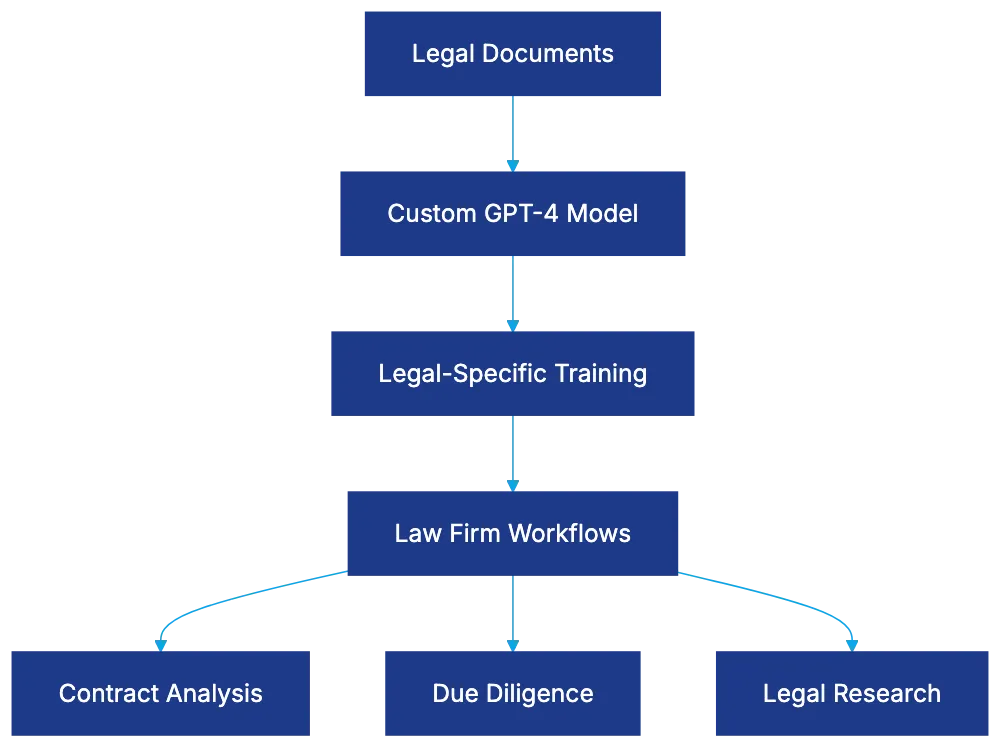
Harvey AI Technology Stack Overview:
Launched in San Francisco in 2022, Harvey AI teamed Weinberg’s litigation experience with Pereyra’s machine learning skills. A strategic partnership with OpenAI provided early access to GPT-4 legal architecture. Harvey expanded from 13 to 42 countries in 2024, with Allen & Overy as an early client, enhancing its Am Law 100 presence. Harvey distinguished itself in a crowded market by arriving when firms needed solutions for overwhelming document volumes.
Technology Architecture and Legal-Specific Training
Harvey’s platform, built on a custom GPT-4, involves extensive engineering. It was fine-tuned on over 10 billion legal-specific tokens, making its responses superior for legal work. The system understands jurisdiction-specific rules and legal reasoning, differentiating between laws like those of Delaware and New York. Harvey identifies contractual meanings, uncovering provisions and inconsistencies rapidly, acting as an assistant to partners who review its analysis.
Core Features for Legal Workflows
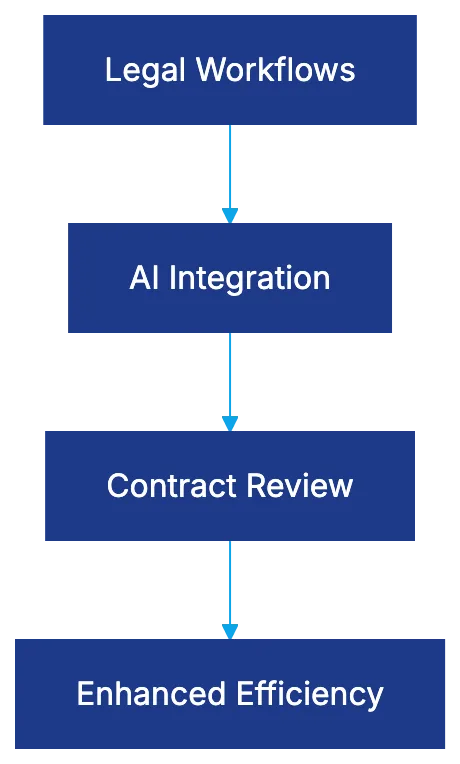
Harvey AI Core Workflow Process:

Harvey supports law firms by analyzing contracts such as purchase agreements and NDAs, ensuring consistency by highlighting deviations. In due diligence, Harvey processes high-volume documents efficiently, prioritizing those requiring attorney review, translating to cost savings. Harvey’s research capability synthesizes relevant authority instead of returning numerous cases, providing summaries with citations. Integration with Microsoft 365 facilitates seamless use within Word and Outlook.
Enterprise Security and Data Protection
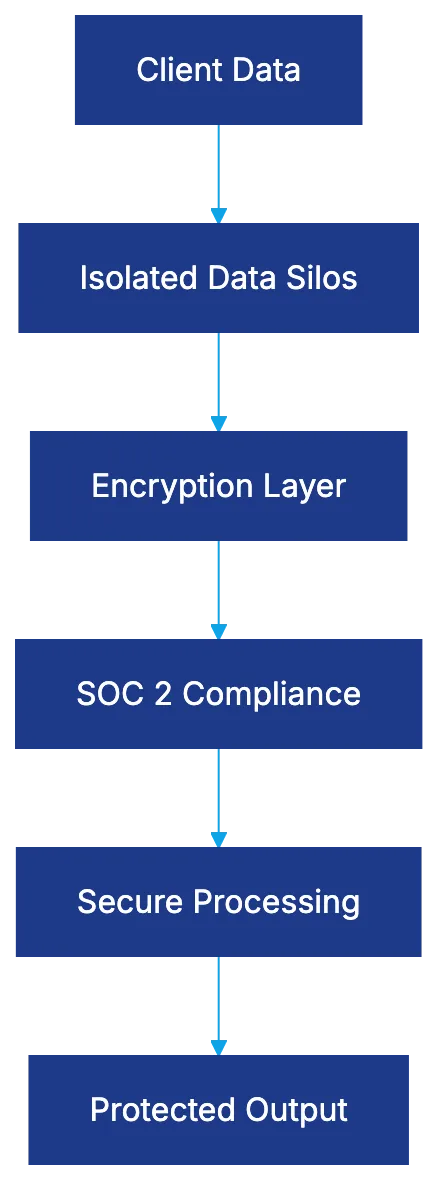
Harvey’s security model uses client-controlled data silos to prevent information mingling and ensures attorney-client privilege. It doesn’t learn from client interactions, opting for separate training. Data encryption, SOC 2 Type II certification, and compliance documentation underscore its security standards.
Market Adoption and Growth Trajectory
Harvey Security Architecture:
Adoption varies by firm size and practice area, with corporate groups leading due to demand for AI in high-volume reviews. Expansion from 13 to 42 countries reveals Harvey’s scaling capability. Its premium pricing reflects enterprise-level support and training while positioning as a strategic investment for large firms.
Pricing Structure and Return on Investment
At $1,000 per user monthly, Harvey is high-end. Firms gauge ROI through time savings and capacity gains rather than direct revenue. Harvey improves use ratios and offers AI-enhanced services as differentiation.
Practical Use Cases Across Practice Areas
M&A due diligence is a prime Harvey use case. Harvey processes thousands of contracts quickly, flagging those needing attention. It assists drafting from templates, ensuring consistency and reducing errors. Document review for litigation leverages Harvey to classify relevance and extract key facts, balancing AI use with human review.
Competitive Landscape Analysis
Competitors like Luminance and Kira offer contract review but differ in methodologies. Spellbook focuses on drafting, offering lower-cost access to smaller firms. Thomson Reuters and LexisNexis leverage existing databases for AI-enhanced research. Harvey’s native architecture remains its edge.
Implementation Challenges and Best Practices
Effective Harvey implementation involves change management and comprehensive training. Firms allocate resources to training, adapting quality control processes with AI involvement. Ethical use policies are crucial, ensuring client confidentiality and competence are maintained.
Bottom Line
Harvey AI leads in enterprise legal AI with substantial funding and strategic partnerships, showing impressive Am Law 100 adoption. Its GPT-4 foundation, tailored with extensive legal training, boosts firm capabilities. Despite premium pricing, it suits large firms with transaction volumes, while smaller firms might consider alternatives like Spellbook or Kira. Harvey’s role as a legal AI pioneer continues amid rapid technological evolution.
Frequently Asked Questions
What types of law firms benefit the most from using Harvey AI?
Harvey AI primarily benefits larger law firms, especially those engaged in high-volume practice areas like corporate law and M&A due diligence. These firms require efficient document handling and analysis, making Harvey's capabilities particularly advantageous in managing substantial workloads.
How does Harvey AI ensure data security for client information?
Harvey AI employs a security model that uses client-controlled data silos, preventing information mingling and upholding attorney-client privilege. Additionally, the company adheres to stringent security standards, including data encryption and SOC 2 Type II certification, to protect sensitive information.
What is the cost structure for using Harvey AI?
Harvey AI is priced at $1,000 per user per month, positioning it as a premium solution in the legal tech market. Firms evaluate their return on investment through time savings and enhanced operational efficiencies rather than direct revenue increases.
How does Harvey AI differ from its competitors?
Harvey AI distinguishes itself through its native GPT-4 architecture, fine-tuned specifically for legal applications. While competitors like Luminance and Kira focus on contract review, Harvey offers more comprehensive features for due diligence, contract analysis, and legal research.
What practical applications does Harvey AI have in legal workflows?
Harvey AI is effectively utilized in M&A due diligence, contract drafting, and document review for litigation. It streamlines processes by classifying documents, flagging those needing attention, and ensuring consistent drafting, thereby enhancing overall productivity in legal settings.
What are the recommended best practices for implementing Harvey AI in a law firm?
Successful implementation of Harvey AI involves proactive change management and comprehensive user training. Law firms should allocate adequate resources for training and adapt their quality control processes to successfully integrate AI into their workflows.
Can smaller firms use Harvey AI effectively?
While Harvey AI primarily caters to larger firms due to its pricing and features, smaller firms may find it less accessible. They might consider alternatives like Spellbook or Kira, which offer lower-cost solutions and may better suit their operational needs.
Related Articles
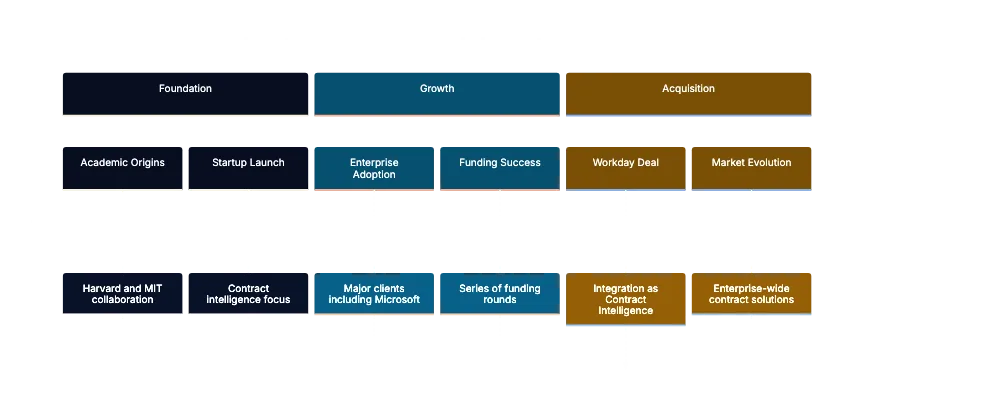
Evisort: Revolutionizing Contract Intelligence
Discover how Evisort's innovative contract solutions transform legal operations and integrate with enterprise systems post-acquisition.
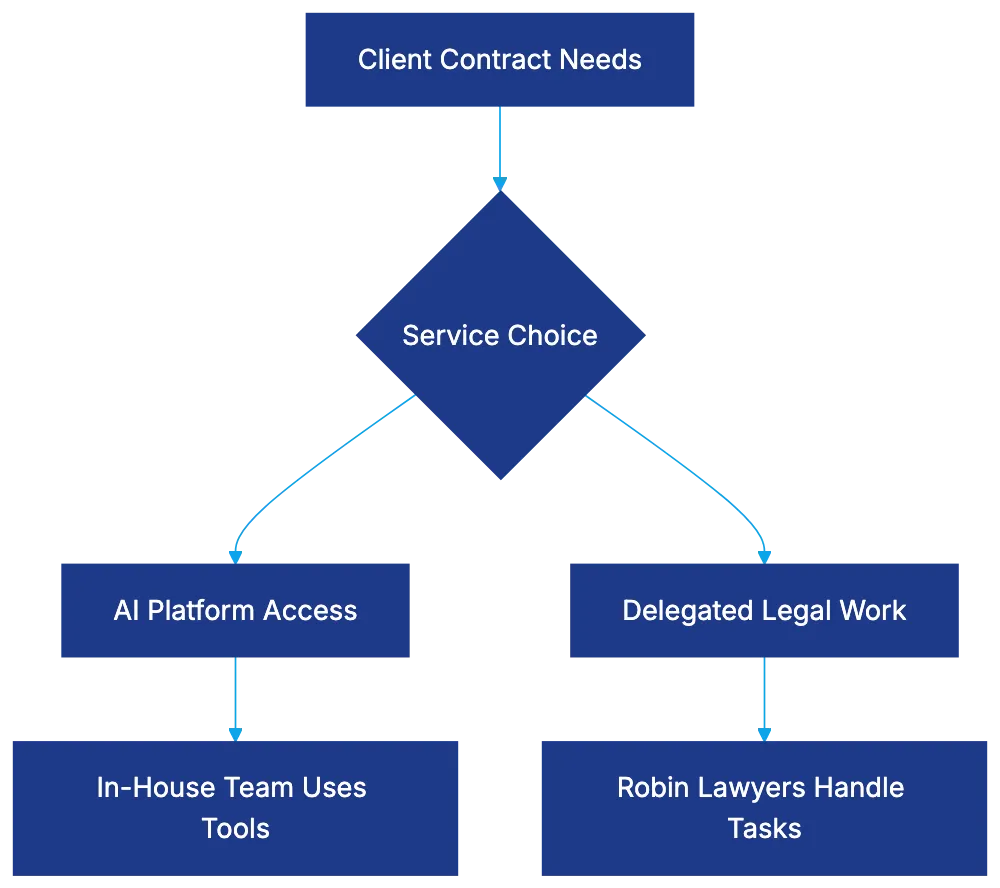
Robin AI: Transforming Legal Contract Review
Explore how Robin AI combines contract automation with legal expertise, redefining legal services in the UK market.
What Is Spellbook and Why It Matters
Explore Spellbook, the AI copilot for lawyers revolutionizing contract drafting and legal workflows.